## Introduction
Every stone importer who’s ever paid to ship air knows the frustration: you book a 40ft container, but your tiles only fill 70% of it. Or you book a 20ft container and the factory tells you the tiles won’t fit — you need another $1,800 container or you leave product behind.
The root cause is almost always the same: importers don’t calculate their cargo’s actual cube and weight before booking containers. They rely on rough rules of thumb that don’t account for crate configurations, tile thickness variations, or the weight limits that actually constrain loading.
This calculator guide gives you the formulas, reference tables, and practical tools to calculate exactly how much stone fits in each container type — before you place your order, before you book your freight, and before you get a surprise at the factory loading bay.
Bookmark this page. You’ll use it for every order.
The Stone Tile Loading Calculator
Standard Loading: Crated Stone Tiles
For tiles packed in standard export wooden crates (the most common packing method for international stone shipments):
Reference data for estimation:
- Average crate size: 1.2m × 1.0m × 0.6m (L × W × H)
- Crate weight: 20–35 kg per crate (varies with wood type and tile format)
- Tiles per crate: depends on tile size (see table below)
Tile format vs. sqm per crate (12mm thickness, standard format):
Note: Crate count per container varies with loading pattern. Figures above assume floor-loading (no pallets).
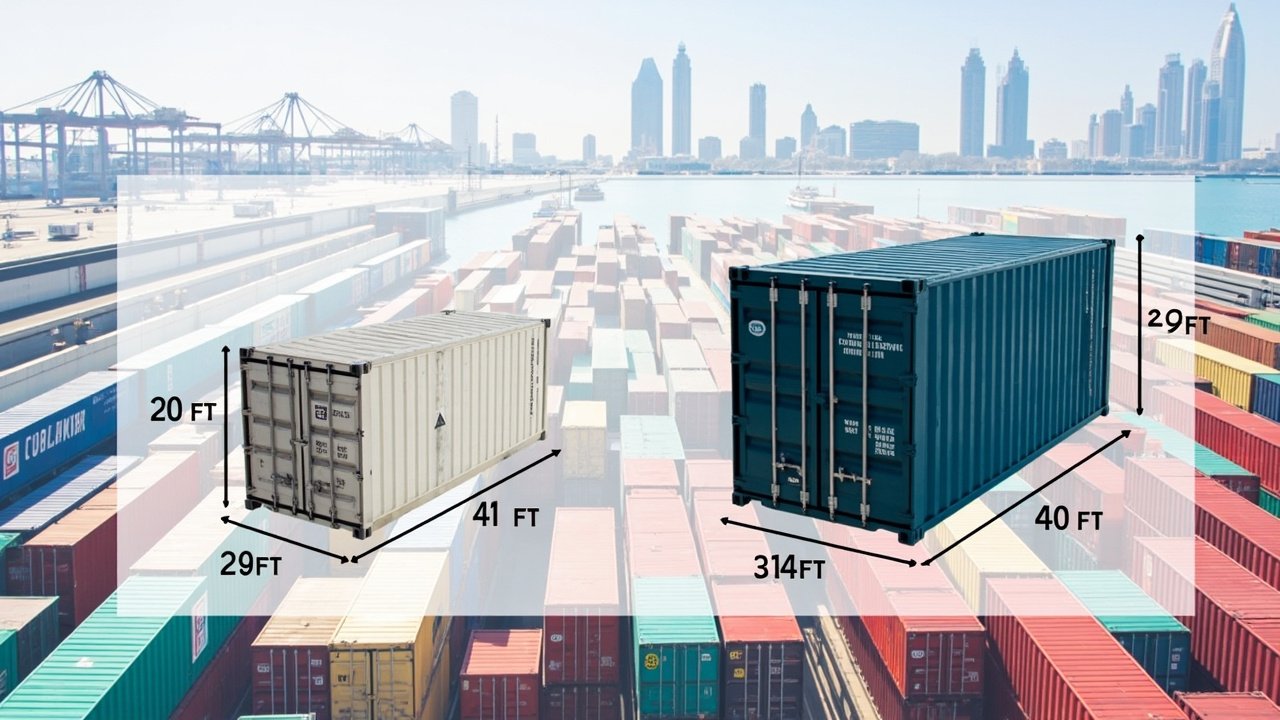
For a 20ft container (33.2 CBM usable):
- If each crate occupies: 1.2 × 1.0 × 0.6 = 0.72 CBM
- 33.2 CBM ÷ 0.72 CBM = ~46 crates theoretical max
- Practical loading: 40–44 crates (accounting for stacking patterns and door clearances)
For a 40ft GP container (67.7 CBM usable):
- 67.7 CBM ÷ 0.72 CBM = ~94 crates theoretical max
- Practical loading: 85–92 crates
For a 40ft HC container (73.0 CBM usable):
- 73.0 CBM ÷ 0.72 CBM = ~101 crates theoretical max
- Practical loading: 92–98 crates
Tile Thickness Impact on Loading
Tile thickness directly affects how many tiles fit per crate and therefore how much you load per container. This is commonly underestimated.
Example: An order of 800 sqm of 20mm marble tiles was planned for a 40ft container. At 45 kg/sqm × 800 sqm = 36,000 kg. The 40ft weight limit is 30,200 kg. You can’t fit 800 sqm. The actual load is limited to ~670 sqm by weight. The importer was 130 sqm short.
Quick Reference Loading Tables
20ft Container Loading Capacity
40ft GP Container Loading Capacity
40ft HC Container Loading Capacity
Using the Factory Loading Plan
The most important document you can request from your factory before shipping is a container loading plan. This document shows:
- How crates/slabs will be arranged in the container
- Total cubic meters used vs. container capacity
- Total weight vs. container weight limit
- Utilization percentage (you want to see 85%+ utilization)
A good factory will provide this for free as part of their export documentation. It typically looks like a top-down diagram of the container floor showing each crate position.
What to check in the loading plan:
- Volume utilization: is the container 85%+ full by volume?
- Weight utilization: is the weight under the max payload?
- Are crates/slabs secured properly (blocking, bracing, strapping)?
- Is the loading pattern consistent with the container’s strength points?
What to do if the loading plan shows poor utilization (< 80%):
- Ask the factory to re-arrange or add more cargo
- Or accept that the freight cost per sqm will be higher
- Never pay for a half-empty container if you have more cargo to add
Practical Tips to Maximize Container Utilization
1. Request Tight Crate Stacking
Standard crates have some wasted space between them. Ask the factory to pack crates as tightly as possible and use the full container width. A difference of 10cm per crate row across a container can mean 20–30 extra sqm of tiles.
2. Ask About Layer Patterns
For tile crates, the factory can use alternating layer patterns that lock the crates together and use space more efficiently. This can improve utilization by 3–5%.
3. Use 40ft HC Over Standard 40ft
The high cube costs only 10–15% more but gives you 8–12% more volume. If you’re shipping 800 sqm or more, the extra cost per sqm is almost always worth it.
4. Consolidate Across Orders
If you have multiple orders from the same factory within a short time window (4–6 weeks), consider consolidating into one larger container rather than shipping several smaller ones. This reduces per-sqm freight and handling costs.
5. Pre-Confirm Door Measurements
Container doors are 2.35m wide × 2.39m high (20ft) or 2.35m × 2.39m (40ft). If your crates are slightly larger than standard, verify they can actually pass through the door before the factory loads them. A crate that doesn’t fit through the door is a serious problem.
Conclusion
Container loading calculations are not complicated, but they require attention to detail. The key steps:
- Know your product’s weight per sqm (thicker = heavier)
- Calculate total cargo weight before booking containers
- Check volume utilization using the reference tables or the factory loading plan
- Book the right container based on which constraint (volume or weight) actually applies to your cargo
A 40ft container that saves you $500 in freight but sits half-empty is not a win. A 20ft that fits your cargo exactly, at the right price, is the goal.